In a house, the dryer vent is a short run through an exterior wall you can walk outside and look at. In a stacked condo or townhome it turns upward, joins a shaft shared with your neighbors, and ends on a roof you have never been on. That difference is why these clog faster, and why nobody notices until the dryer starts taking two cycles.
In a single-family house the dryer vent is a short, roughly horizontal run through an exterior wall. You can walk outside and look at the flap. In a Cherry Hill condo or a stacked townhome, it is frequently none of those things: the duct turns upward, joins a vertical shaft that serves the units above and below you, and terminates somewhere on the roof you have no access to.
That single structural difference changes everything about how quickly the run clogs and how long a problem goes unnoticed. Lint has to travel further, it has to travel up, and the only person who would ever see the termination point is whoever was last on the roof.
We clean a lot of these across Camden County, and the pattern is consistent enough to be worth writing down. If you want the straightforward version of the service first, that is on our dryer vent cleaning page, and our Cherry Hill dryer vent cleaning page covers the local service; this piece is about what makes the multi-unit version different.
It is not that the lint is different. It is that the geometry is working against you in four separate ways at once.
A horizontal run only asks the blower to push lint along. A vertical stack asks it to push lint upward, against gravity, for the full height of the building. Whatever the airflow cannot carry settles back down and waits.
A shared stack collects from every unit tied into it. Your dryer can be used twice a week and still be venting into a shaft that four other households have been loading since the last cleaning.
In a single-family home you can see the exterior flap from the yard and notice when it stops opening. On a roof-terminated stack there is no version of that check available to you. The first symptom is usually the dryer, not the vent.
Getting from a laundry closet to a roof stack usually takes several elbows. Every direction change is a place where airflow slows and lint has an opportunity to drop out and start a deposit.
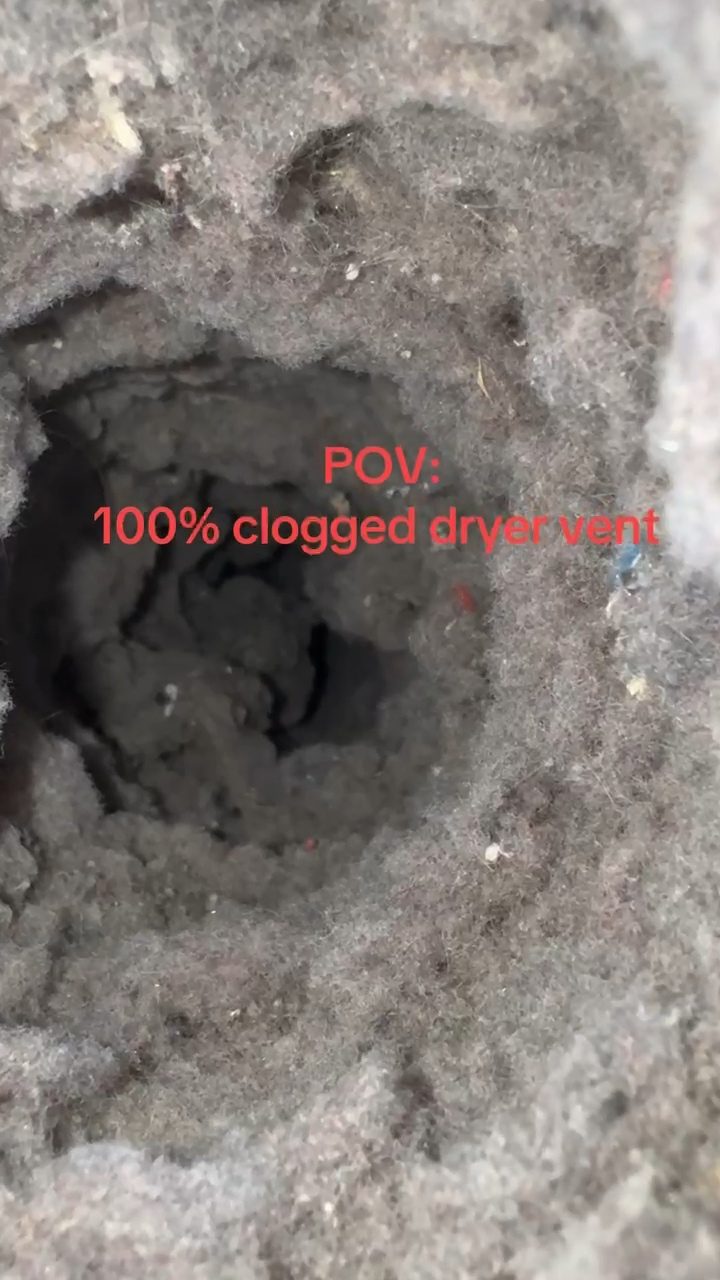
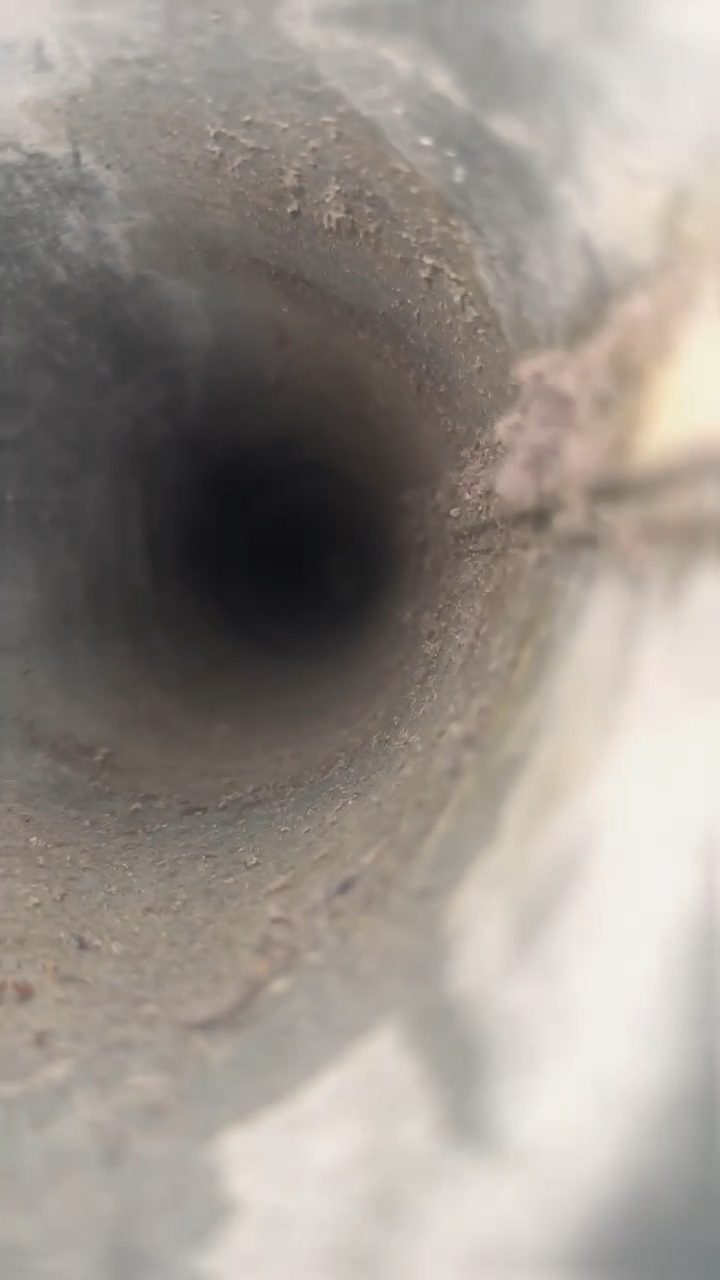
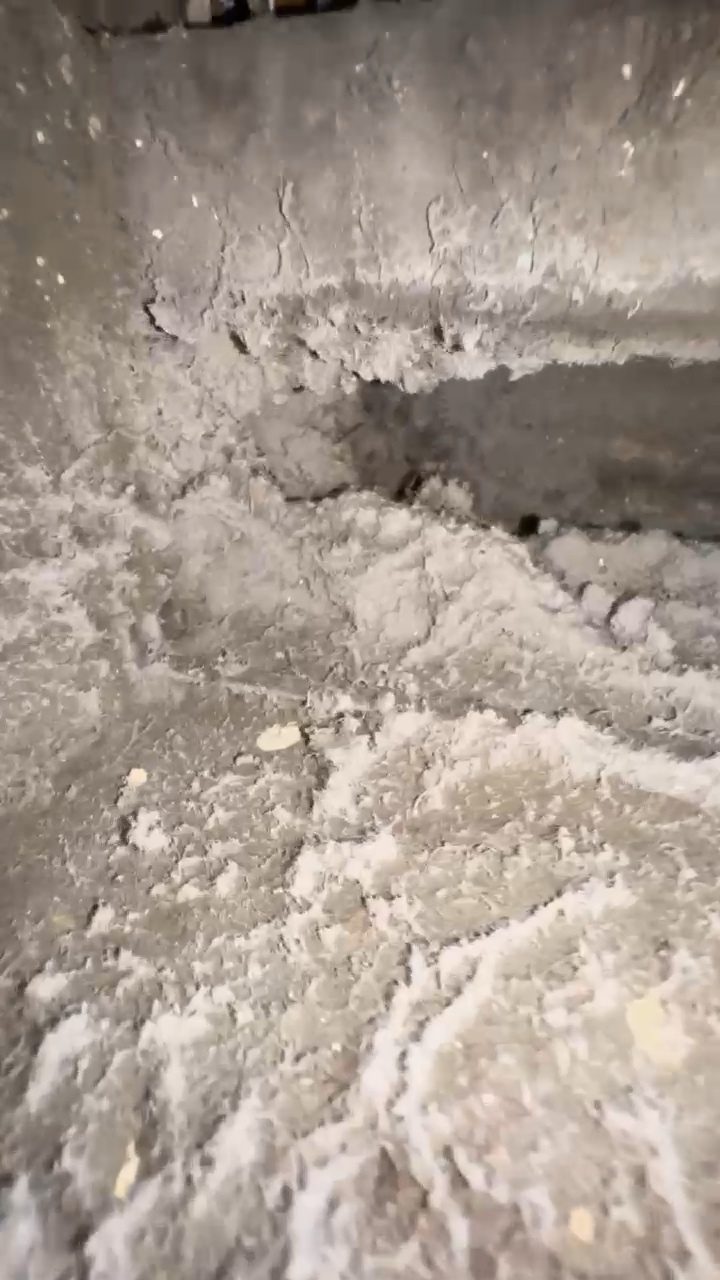
These came out of real customers’ vent lines. A shared stack does not look different from the inside; there is simply more of this, further up, where nobody has been looking.
You cannot inspect a shared stack yourself. What you can do is read the dryer, which is a surprisingly reliable instrument.
This is the question that keeps shared stacks dirty, because the honest answer is that it depends on your building and nobody enjoys finding out.
In most Cherry Hill associations the split runs roughly along the line of what is inside your walls versus what is common. The duct from your dryer to the point where it joins the shared shaft is typically the unit owner’s. The shaft itself and the roof termination are typically the association’s. But that is a general pattern, not a rule, and the only document that actually settles it is your own association’s declaration and bylaws.
What we would suggest, practically: read your governing documents before you assume either way, and if the shared portion has not been serviced in years, raise it with the board rather than paying to clean your segment repeatedly into a blocked stack. We are happy to clean the section that is yours and tell you plainly what we can see of the rest, so you have something concrete to bring to the association.
↑ Back to topEvery visit is $69, and it covers more than the duct itself.
Call or use the form. Tell us it is a condo or townhome.
We work out where your duct goes before touching anything.
Rotary brushing the full accessible length, with vacuum extraction.
The machine gets cleaned inside and the flexible connector replaced.
We confirm it is actually moving air before we leave.
The multi-story buildings along Route 70 are where we see roof-terminated stacks most often. These are the ones where a unit owner genuinely has no way to inspect their own vent termination.
Mid-century developments with a mix of single-family and attached homes. The attached units frequently have longer, more indirect vent runs than their neighbors fifty feet away, which surprises people.
Townhome clusters off Route 38 and Kings Highway. Shared party walls usually mean shared or adjacent duct chases, and cleaning schedules that were set by an association years ago and never revisited.
What condo and townhome owners in Cherry Hill ask us most.
Once a year is the general guidance for a dryer vent, and a shared or vertical stack is a reason to lean toward that rather than past it. Longer runs, more elbows and shared use all shorten the interval before airflow drops off. If you run laundry most days, or the run terminates on the roof, once a year is the floor rather than the target.
The clearest indicator is that you cannot find your own exterior vent flap. If there is no visible termination on a wall near your unit, the duct is almost certainly turning upward into a shaft. Your association’s building plans will confirm it, and we can usually tell within a few minutes on site.
It is real, and the mechanism is simple rather than dramatic. Lint is dry, fine and flammable, it accumulates where you cannot see it, and a restricted vent keeps heat inside a machine designed to shed it. The reassuring part is that unlike most fire risks in a home, this one is removed outright by cleaning it, which is entirely within your control.
Usually not for the portion that belongs to your unit, which is what we are normally cleaning. We work from inside, brushing and extracting along the accessible length of the run. If the blockage turns out to be up in the shared shaft or at the roof termination, we will tell you that plainly rather than charge you to keep working on a section that is not the problem.
The vent cleaning itself, cleaning inside the dryer, and replacement of the flexible connector hose at no extra cost. The connector is often the worst part of the whole system, because it is the piece that gets crushed behind the machine, and replacing it is included rather than quoted separately.
$69, including the dryer interior and a new connector hose.
Real reviews from real customers, pulled live below.
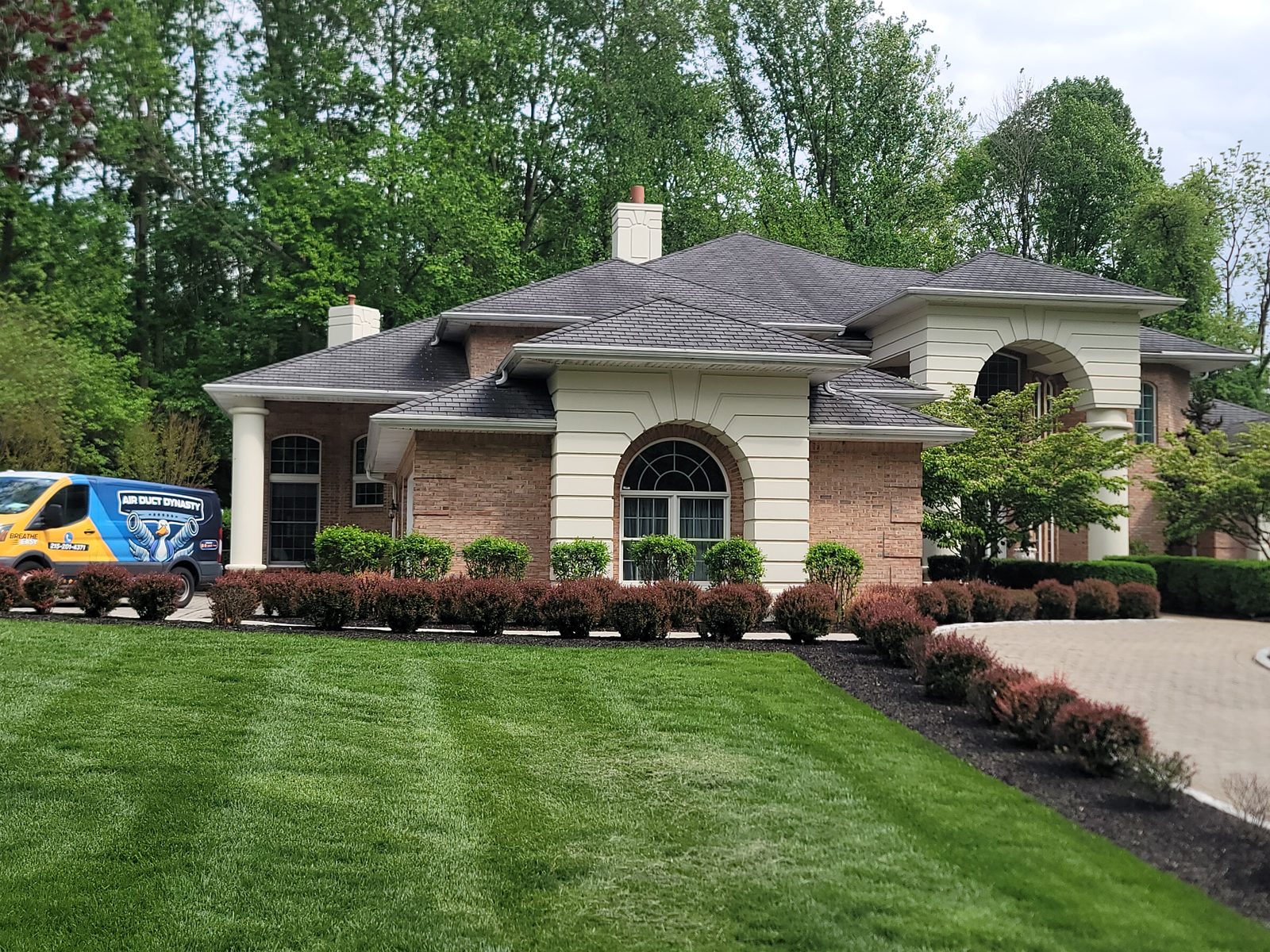
Air Duct Dynasty serves Cherry Hill and the surrounding Camden, Burlington and Mercer County communities from our base in Huntingdon Valley, PA.
Air Duct Dynasty — family-owned, serving Cherry Hill, NJ and Camden County.