The first cold night of the year is when a chimney that has sat idle since March gets asked to work with no warning. Last season’s creosote is still in there, a wet summer has been working on the crown, and something may well have moved in. A $59 inspection before the first burn is the cheapest afternoon of the heating season.
There is a particular night every autumn in Huntingdon Valley when the temperature drops into the forties, somebody says “let’s light a fire,” and a chimney that has sat untouched since March gets asked to do its job with no warning. That is the night problems surface, and it is the worst possible time to find them.
Nothing about a flue improves over the summer. Whatever creosote last season left on the walls is still there, hardened. Eight months of Montgomery County humidity has been working on the mortar joints and the crown. And a chimney with an open or damaged cap has spent the warm months as the most appealing piece of real estate on the block for birds and squirrels.
An inspection before the first burn costs a fraction of what a chimney fire does, and it takes an afternoon. Ours runs $59 and we do it on our chimney services visits across the township. We are a family-owned outfit based here in the township, not a call center routing work to whoever is nearest.
A chimney is not dormant in the summer. It is just unsupervised. Four things change between the last fire of March and the first fire of October.
Creosote is what condenses out of wood smoke when flue gases cool. It does not burn off or fall away over the summer. It sits and cures, and the Chimney Safety Institute of America treats about an eighth of an inch of buildup as the point where a flue should be swept before it is used again.
A Pennsylvania summer is wet, and a chimney crown is the most exposed masonry on the house. Water sits in hairline cracks, freezes on the first hard night, and widens them. Crown and flashing damage almost always shows up as a fall discovery, not a spring one.
An uncapped or damaged flue is a sheltered vertical shaft, which is exactly what nesting birds and squirrels are looking for. Nesting material is both a blockage and a fuel source, and it is the single most common thing we pull out of a first-of-the-season inspection.
Clay tile liners crack. Older homes around the township sometimes have no liner at all behind the firebox. Neither condition announces itself while the fireplace is cold, and both are the sort of thing you want found by a camera rather than by smoke in an upstairs bedroom.
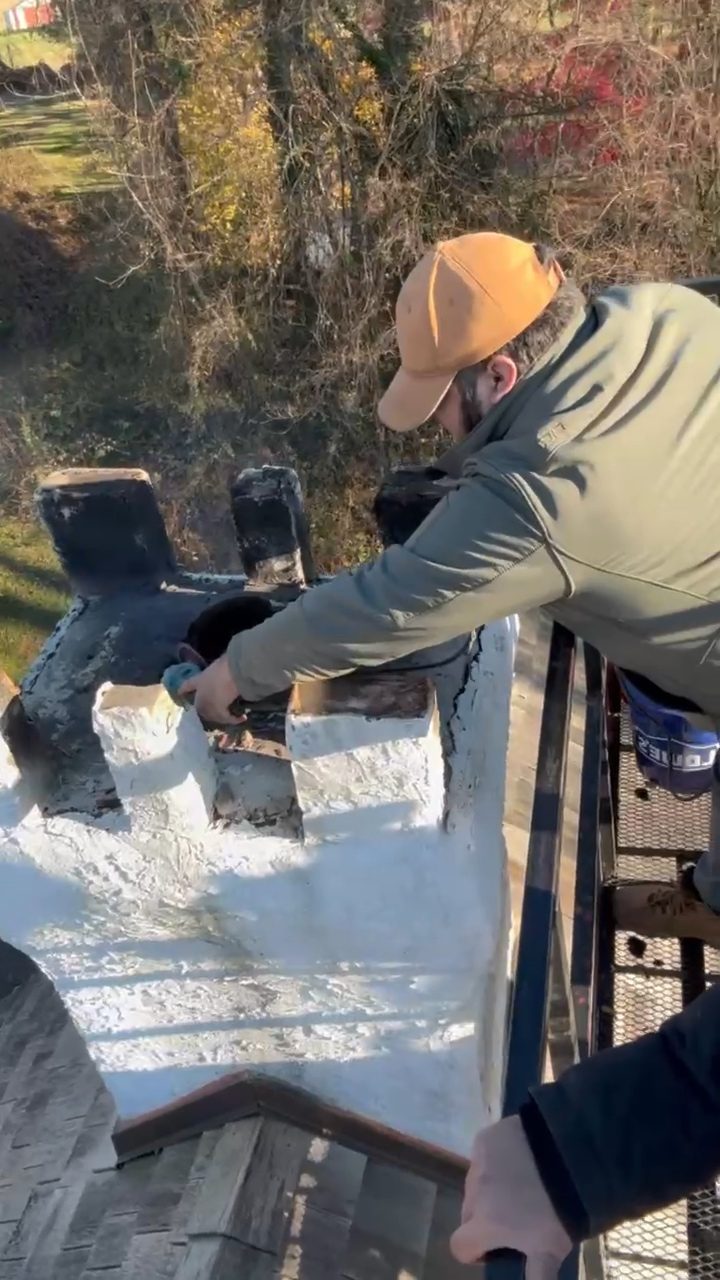
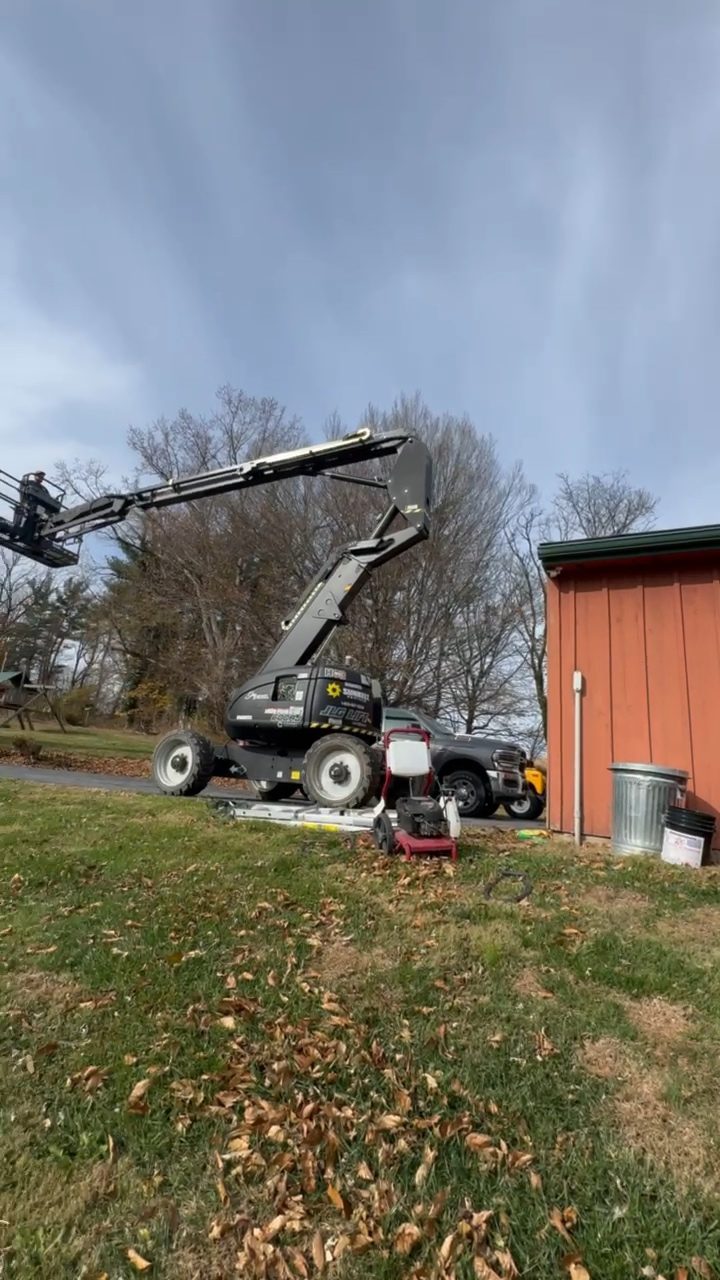
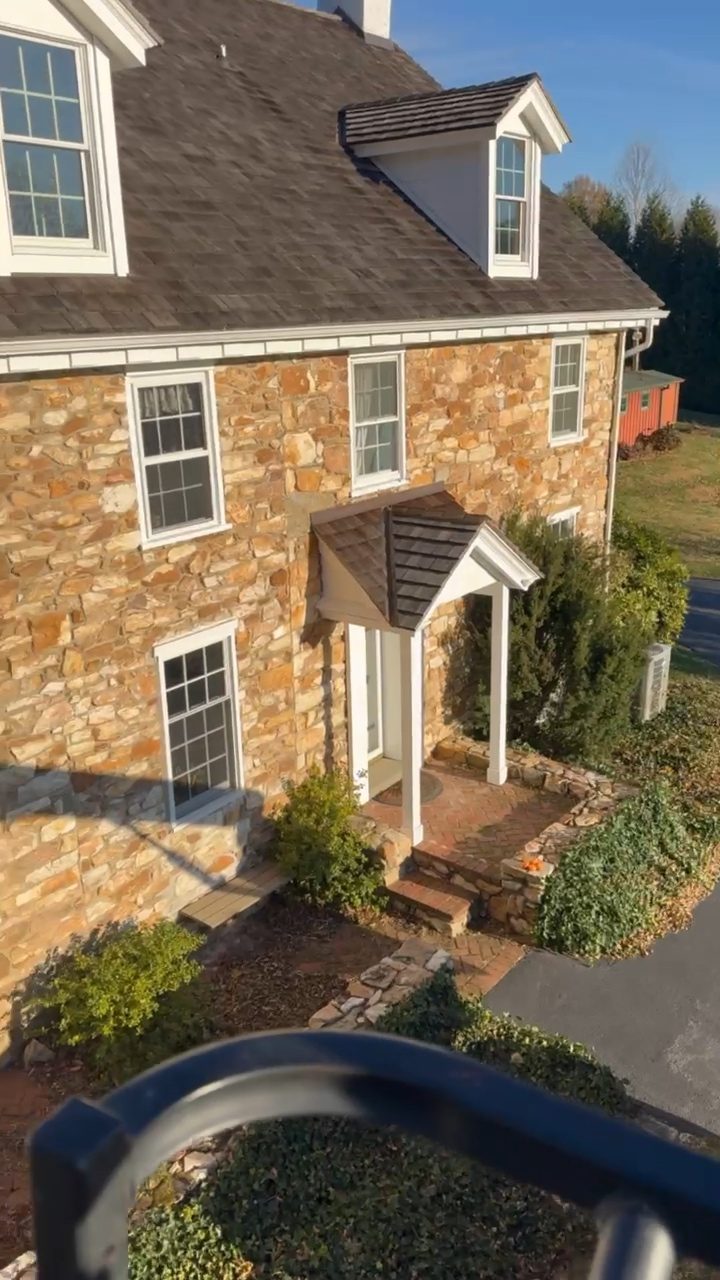
Real photos from our work. Most of what matters on a chimney is at the top, which is why almost every one of these was taken from a lift rather than from the roof.
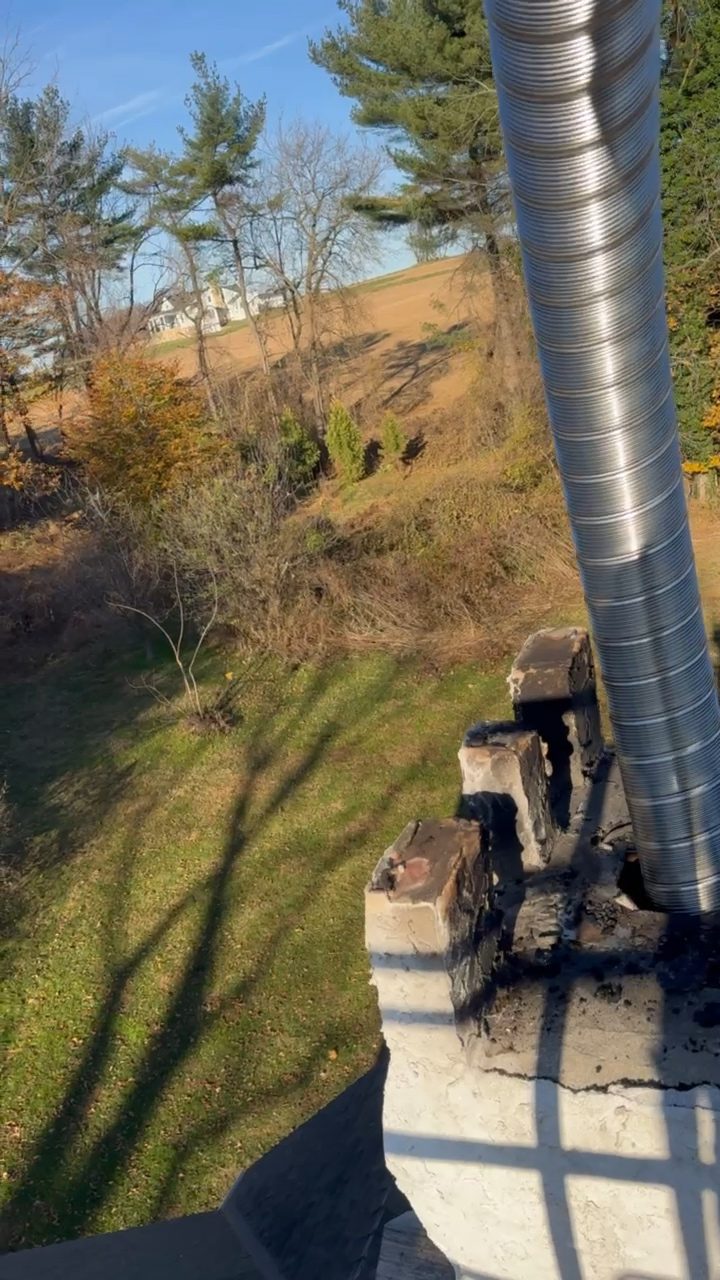
None of these mean the chimney is unusable. They mean it should be looked at before it is used, which is a much cheaper sentence.
We look before we quote, and you see what we see. Nothing gets recommended off the back of a guess.
Call or use the form. Pre-season slots go first.
We start at the bottom, where blockages and damage show.
The liner is checked along its length, not just at the ends.
Worked from a lift so the top gets a real look.
You see the condition first. The quote comes after.
Heavy tree cover is lovely and it is also the reason so many chimneys along the creek need their caps checked. Leaf litter and nesting material find their way into an open flue faster here than anywhere else we work.
A lot of the housing stock along Route 232 predates modern liner standards. These are the homes where a camera pass matters most, because what is behind the firebox is genuinely unknown until somebody looks.
Exposed, higher-elevation lots take more weather on the stack. Crown cracking and flashing wear turn up sooner on these houses than on sheltered ones a mile away.
What Huntingdon Valley homeowners ask us most in September and October.
Before the first fire of the season, which in this part of Montgomery County usually means late September through October. Booking pre-season means any repair work has time to happen before you actually need the fireplace, rather than in the middle of a cold snap when every sweep in the area is booked out.
Once a year is the standard, and it applies whether or not you used the fireplace much. An annual inspection is what catches the slow problems: a hairline crack in the crown, a liner joint opening up, a cap that has come loose. Our chimney inspection is $59 and takes an afternoon.
Creosote is the tar-like residue that condenses out of wood smoke when flue gases cool on their way up. It is flammable, it builds up in layers, and it hardens over time. The Chimney Safety Institute of America treats roughly an eighth of an inch of buildup as the point at which a flue should be swept before it is used again.
Yes, and people are often surprised by that. A gas appliance produces very little creosote, but it still vents combustion gases through a flue that can crack, corrode, block, or come loose from the appliance. A blocked gas flue is a carbon monoxide problem rather than a fire one, which is not an improvement.
Of course. Pre-season is the ideal timing, not a requirement. If you have already had a few fires and something seems off, that is a good reason to move the inspection up rather than wait. Give us a call at (215) 201-4371 and we will get you on the schedule.
A $59 inspection now beats an emergency call in January.
Real reviews from real customers, pulled live below.
Air Duct Dynasty is based at 17 Simons Way in Huntingdon Valley and works across Montgomery, Bucks, Delaware and Chester counties. The full list is on our service areas page.
Air Duct Dynasty — family-owned, serving Huntingdon Valley, PA and Montgomery County.